Web Design6 min read
10 Essential Features Every Modern Business Website Should Have in 2026
A practical checklist of the ten features that separate a website that generates inquiries from one that just exists.

UI/UX Design
Good design is measured by what people can get done. We research how your users work, then design websites, web apps and mobile apps that are clear, accessible and pleasant to use.
Confusing software has a cost even when nobody calls it a design problem. Customers abandon sign-ups, staff build spreadsheets to avoid the official tool, and support teams answer the same questions every week.
UI/UX design addresses the cause. User experience design defines what the product needs to do and how people move through it. User interface design turns that structure into screens with clear hierarchy, consistent components and accessible contrast and controls.
We work as a standalone design partner or as part of a development engagement, so designs are always grounded in what can be built and maintained.
Interviews, surveys, analytics review and task observation to understand goals, context and pain points.
Navigation, content structure and user flows that match how people think about the task.
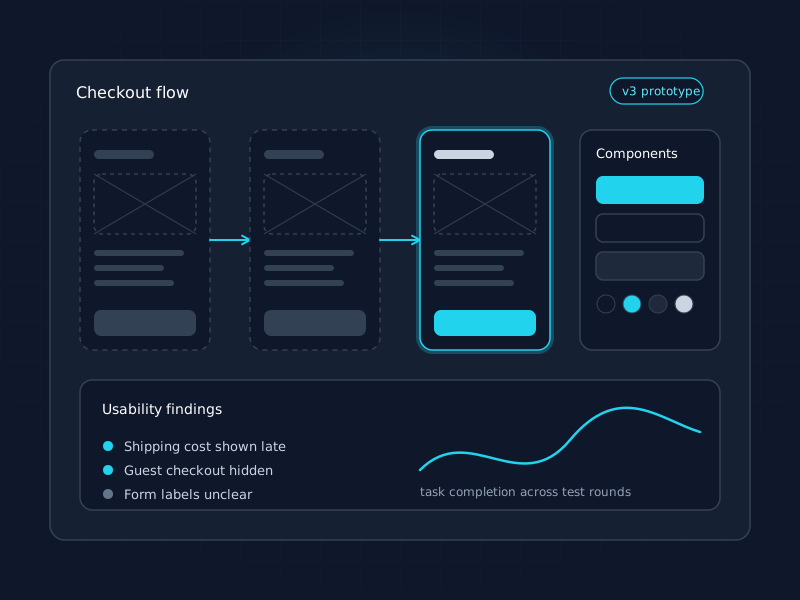
Low and high-fidelity prototypes to explore and validate ideas quickly, before development cost is committed.
Polished screens with typography, color and spacing systems that express your brand and guide attention.
Reusable components, patterns and documentation that keep products consistent as they grow.
Task-based testing with real users and reviews against WCAG guidelines, with prioritized fixes.
The practical value you should expect, and the measures we use to check it.
Clear flows help more users finish sign-ups, purchases and requests.
Interfaces that explain themselves reduce repetitive questions and training time.
Validated designs and shared components reduce rework and decision-making during build.
Accessible design widens your audience and reduces legal and reputational risk.
Stakeholder goals, user research and a review of analytics or the current product.
Personas grounded in research, key tasks and success measures for the design.
Flows and wireframes for several approaches, narrowed through review.
Interactive prototypes tested with representative users, then refined.
Final designs, specifications and components handed to developers, with design support during build.
Our design toolkit is chosen for collaboration and clean handoff to development:
Innovix Solutions is based in Albuquerque, New Mexico and provides UI/UX design for websites and applications for businesses across the United States.
UX design covers the overall experience: what the product does, how tasks flow and whether people can accomplish their goals. UI design is the visual and interactive layer: layout, typography, color, buttons and states. Strong products need both.
Your knowledge is a great starting point, and research often confirms much of it. A small amount of structured research usually uncovers a few surprises that would have been expensive to discover after launch.
Yes. Many projects focus on a high-impact area such as onboarding, checkout or a key dashboard, and introduce a design system that can be extended later.
Accessibility is part of every project. We design with sufficient contrast, clear focus states, readable type and keyboard-friendly patterns, and we review designs against WCAG guidelines.
Organized design files, a clickable prototype, a component library and specifications developers can build from. If we also develop the product, design and build stay in one team.
A practical checklist of the ten features that separate a website that generates inquiries from one that just exists.
Platform choice, product pages, checkout and speed: the decisions that determine whether an online store converts.
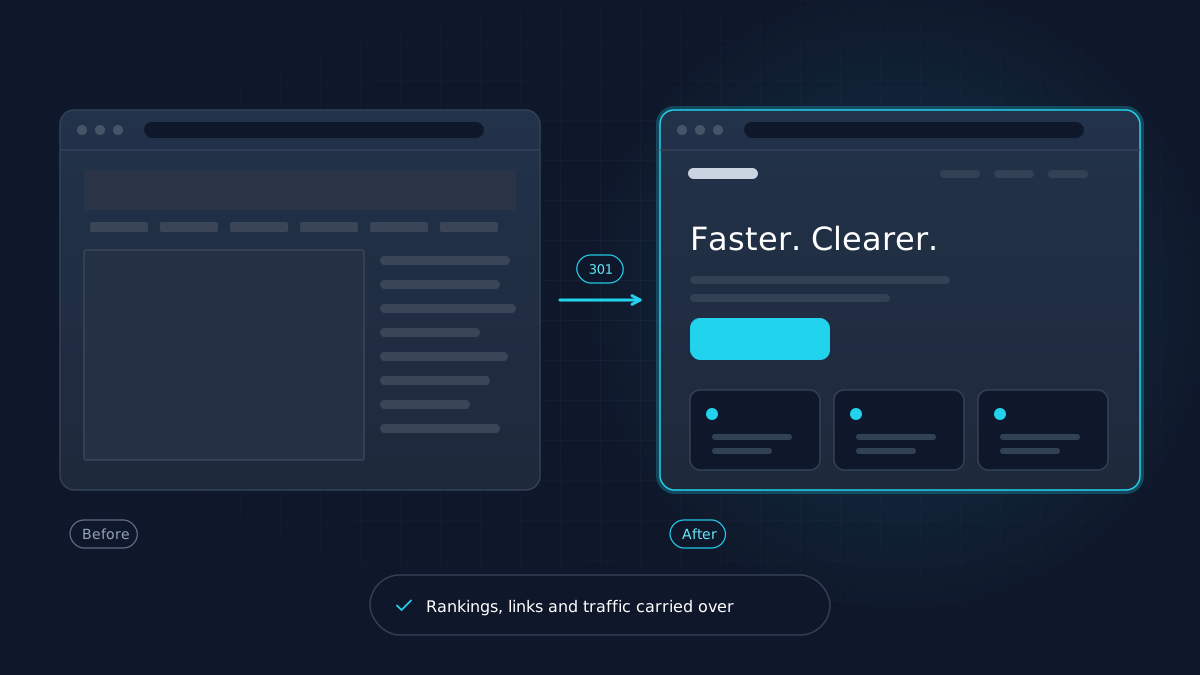
Redesigns are where rankings go to die, unless you plan for search from day one. The checklist we use, phase by phase.
Tell us what you are trying to achieve. We will follow up to discuss scope, options and next steps, with no obligation.