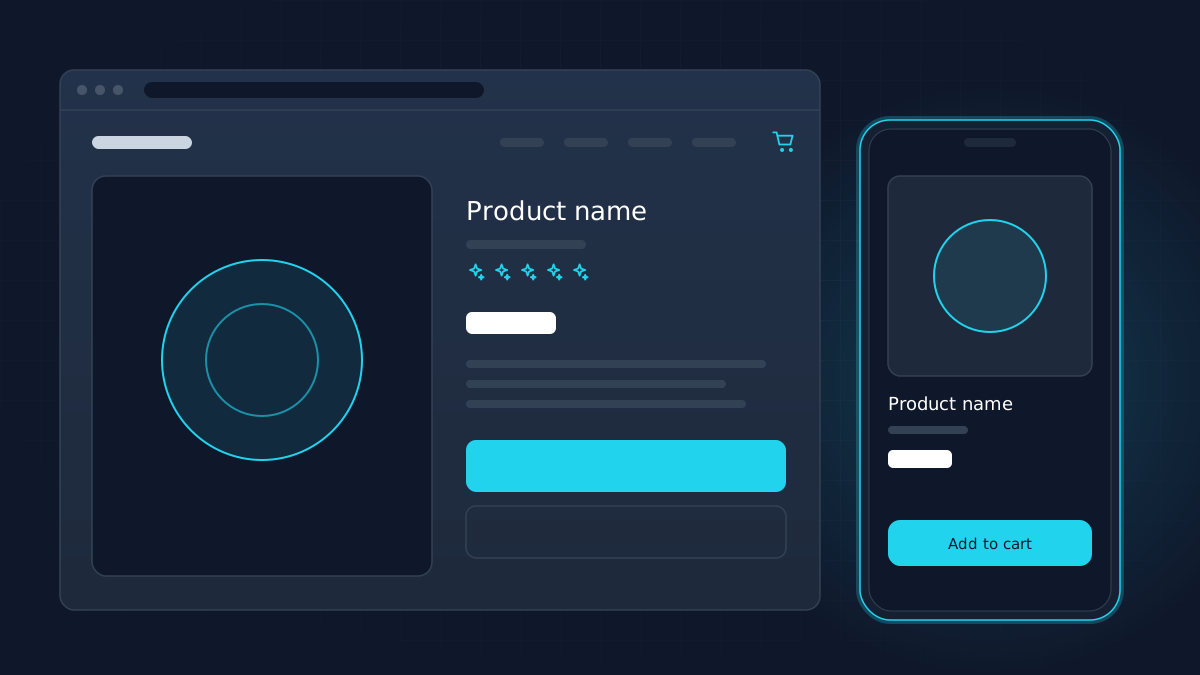
E-commerce6 min read
E-commerce Website Development: Best Practices for Building a High-Converting Online Store
Platform choice, product pages, checkout and speed: the decisions that determine whether an online store converts.

E-commerce Development
From a first Shopify store to a WooCommerce catalog with thousands of SKUs or a custom commerce platform, we build e-commerce websites that make buying easy and running the store easier.
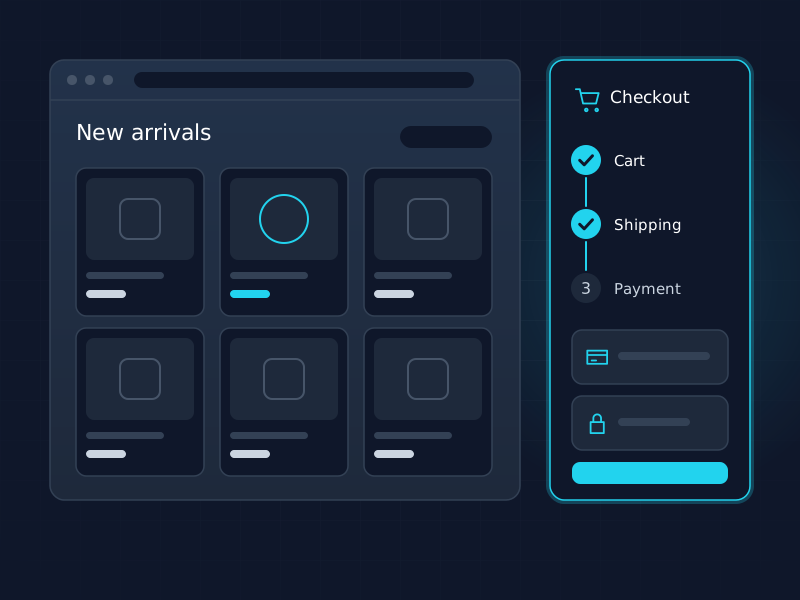
An online store succeeds or fails on details: how quickly product pages load on a phone, whether shoppers can find the right variant, whether shipping costs appear before checkout, and how many fields stand between a full cart and a confirmed order.
Behind the storefront, operations matter just as much. Inventory has to stay in sync, orders need to reach fulfillment without manual copying, and tax, shipping and payment settings must be configured correctly from day one.
Our e-commerce development services cover both sides. We design the shopping experience around how your customers buy, and we connect the store to the systems that keep your business running.
Custom themes and storefronts on Shopify or WooCommerce, designed for your products and your buyers.
Product data structure, variants, filters and rich product pages with the details that answer pre-purchase questions.
Streamlined checkout with guest options, express payment methods, tax and shipping rules configured correctly.
Connections to ERP, inventory, fulfillment, accounting, email marketing and marketplaces so data flows automatically.
Customer-specific pricing, quick reorder, quotes and account-based purchasing for wholesale buyers.
Speed improvements, conversion analysis and testing for existing stores that need better results.
The practical value you should expect, and the measures we use to check it.
Fewer steps and clearer information remove the common reasons shoppers abandon a purchase.
Automated order, inventory and accounting flows reduce manual work as order volume grows.
Established payment gateways and platform security practices protect customers and your business.
A platform and architecture chosen for where your catalog and channels are heading, not just where they are today.
Products, margins, fulfillment, integrations and customer journeys reviewed to choose the right platform.
Category, product, cart and checkout templates designed mobile-first and tested against real tasks.
Theme or application development, catalog setup, payment and shipping configuration, and system integrations.
Orders placed end to end across devices, payment methods, tax scenarios and fulfillment flows before launch.
Go-live support, analytics and e-commerce tracking, then ongoing optimization based on store data.
We recommend platforms based on catalog size, budget, integrations and who will run the store:
Innovix Solutions is based in Albuquerque, New Mexico and provides e-commerce development services to retailers and B2B sellers across the United States.
Shopify is usually faster to launch and simpler to maintain because hosting and security are managed for you. WooCommerce runs on WordPress and offers more control and flexibility, with more responsibility for hosting and updates. Our e-commerce best practices article compares both, along with custom builds.
Yes. We migrate products, customers and order history where the platforms allow, and we map old URLs to new ones with redirects to protect search traffic.
By connecting your store to a single source of truth, whether that is your ERP, an inventory system or the store itself, and syncing stock levels automatically rather than updating them by hand.
We use established payment gateways so card data is handled by providers built for it, keep platforms and extensions updated, and follow security best practices for admin access.
Often, yes. We start with a review of speed, analytics and the checkout flow. Many stores gain more from targeted fixes than from a full rebuild.
Platform choice, product pages, checkout and speed: the decisions that determine whether an online store converts.
A practical checklist of the ten features that separate a website that generates inquiries from one that just exists.
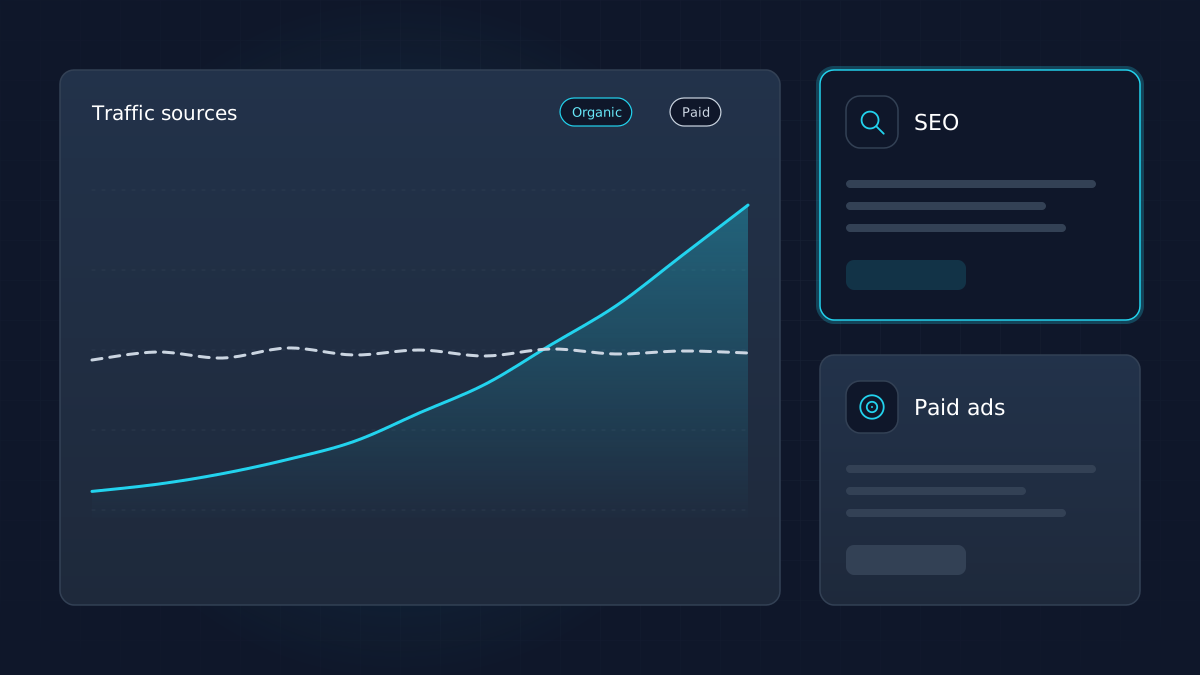
Paid ads are fast and rented. SEO is slow and compounding. A clear framework for deciding where your next marketing dollar should go.
Tell us what you are trying to achieve. We will follow up to discuss scope, options and next steps, with no obligation.